
I still remember the moment I saw my website ranking #1 on Google, and it didn’t happen by luck. It happened after I changed how I approach SEO and started using the right tools.
Before that, I had published many articles that never reached the first page. I was doing everything I thought was correct, but the results were disappointing.
Everything started to change when I began using Rank Math SEO together with AI to optimize my content properly. It helped me understand what my content was missing and how to improve it.
In this case study, I’ll show you the exact steps I followed, what mistakes I fixed, and how I finally ranked #1 on Google, so you can apply the same process to your own website.
Quick Access
ToggleBefore Starting the Process and Planning
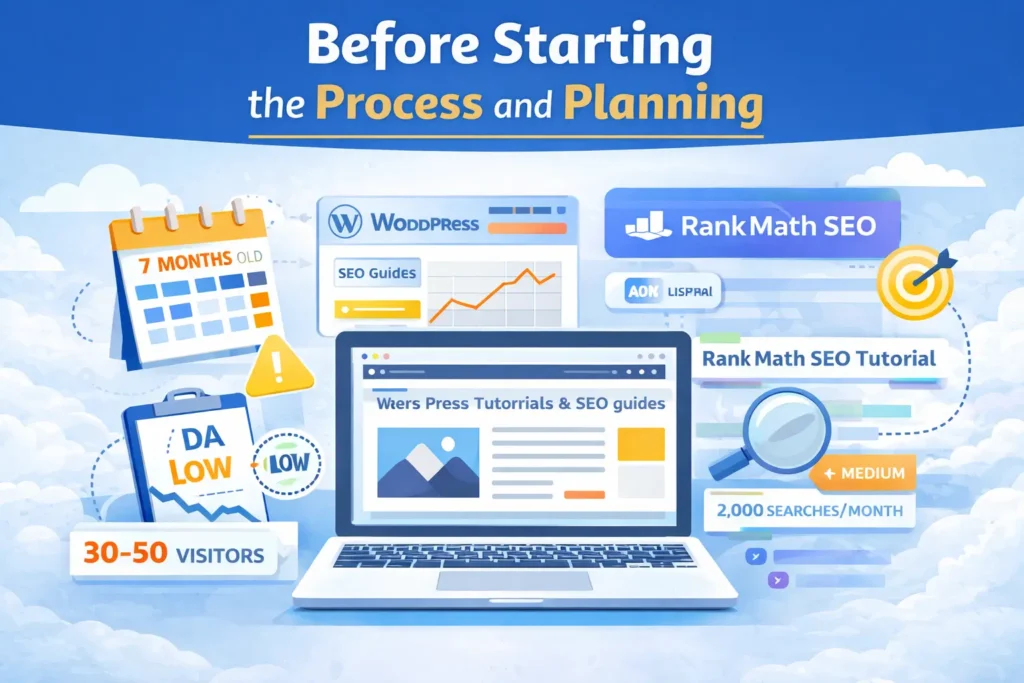
Before starting this process, I want to share the exact condition of my website. Transparency is important because this result didn’t come from a high-authority site.
This was a relatively new website, around 7 months old at the time of the experiment. The site is focused on WordPress tutorials and SEO guides for beginners.
Before this test, my traffic was very low and inconsistent. On average, the website was getting around 30 to 50 organic visitors per day.
My domain authority was also low, and I had very few backlinks. This meant I could not rely on authority and had to depend on proper optimization.
Why I Chose Rank Math Instead of Other SEO Plugins
Before starting this experiment, I had to choose the right SEO plugin carefully. I had used Yoast SEO before, but many important features were limited or locked behind paid plans, which made optimization harder.
That’s why I switched to Rank Math SEO, because it offered more control, better insights, and powerful features in one place. It helped me optimize my content based on real data instead of just chasing basic SEO scores.
Here are the key Rank Math features that helped me rank #1:
Content AI – Helped me improve content using real SEO recommendations
Built-in Schema Generator – Added rich snippets without extra plugins
Multiple Keyword Optimization – Allowed targeting more keyword variations
SEO Score and Suggestions – Showed what needed improvement clearly
Advanced Analytics – Tracked clicks, impressions, and keyword positions
Keyword Tracking – Helped monitor ranking progress
Instant Indexing – Submitted content faster to search engines
Internal Link Suggestions – Improved site structure and relevance
Integrated Keyword Research Tools – Helped plan content strategy better
Keyword Research Using SEMrush
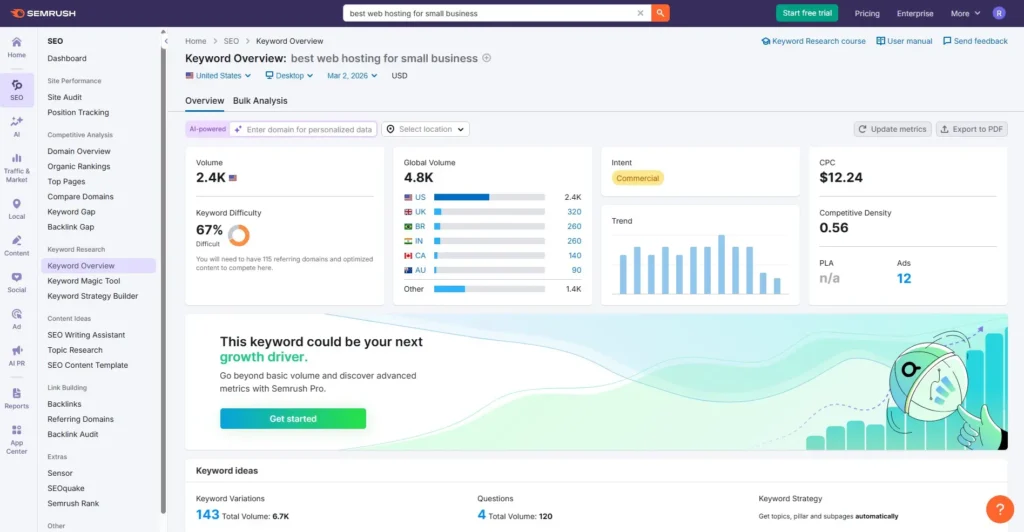
Before writing my article, I used SEMrush to research and validate my keyword idea. This helped me understand whether the keyword was worth targeting.
As shown in the screenshot, the keyword has around 2.4K monthly searches in the US and 4.8K global volume. This confirmed that ranking for this keyword could bring steady traffic.
SEMrush also showed 67% keyword difficulty, Commercial intent, and $12.24 CPC, which means the keyword is competitive but valuable. It also provided 143 keyword variations, which helped me plan my content strategy.
Some of the best SEMrush features I used:
Keyword Volume Data – Shows how many people search the keyword
Keyword Difficulty Score – Helps understand ranking competition
Search Intent Analysis – Shows whether the keyword is informational or commercial
CPC Value – Helps identify profitable keywords
Keyword Variations – Provides related keywords and content ideas
Trend Graph – Shows keyword popularity over time
Writing the Article Using AI + Rank Math Optimization
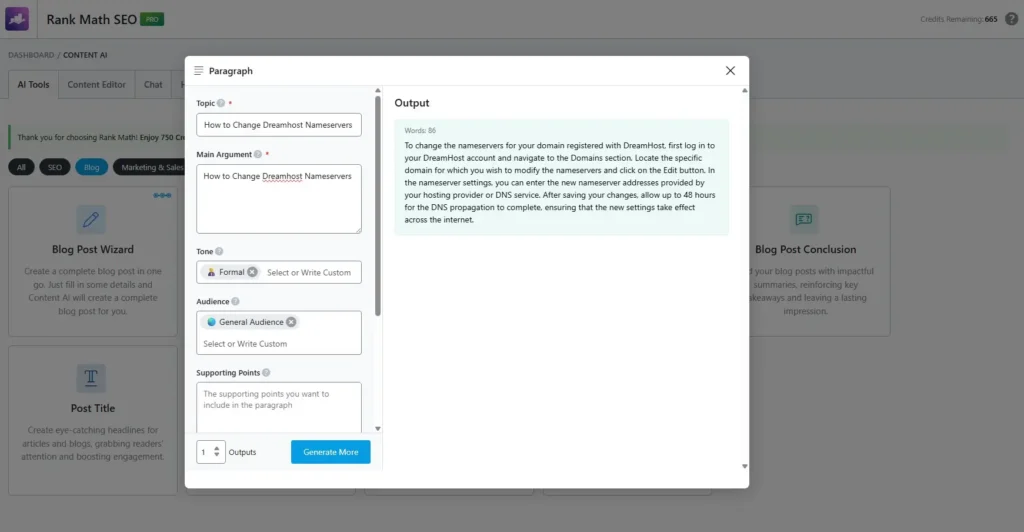
After selecting the keyword, I started writing the article using Rank Math SEO Content AI. This feature helped me generate structured content ideas and improve my paragraphs based on SEO recommendations.
At the beginning, my SEO score was low because the article was not fully optimized. Rank Math guided me step by step, and after proper optimization, I was able to increase my SEO score to 92/100, which gave me confidence that the content was ready to rank.
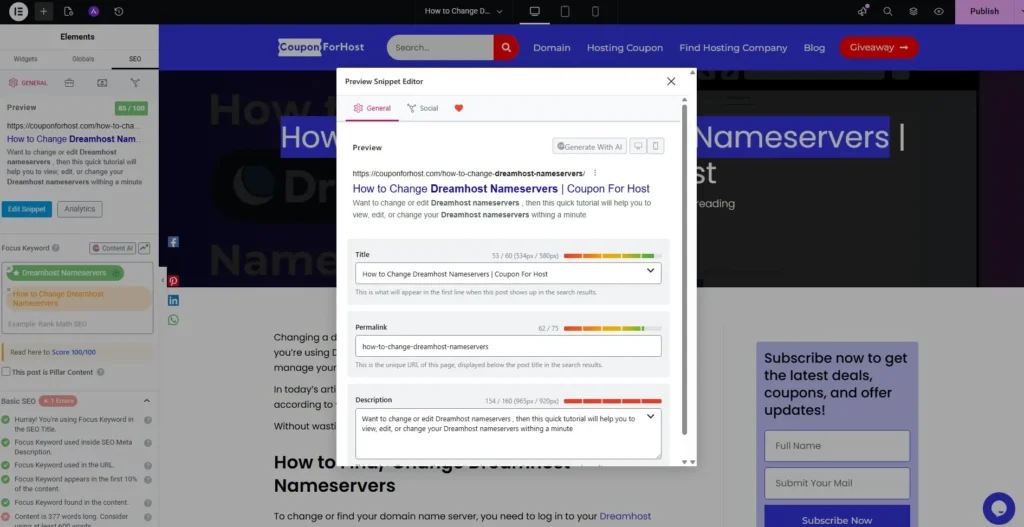
Rank Math helped me optimize several important areas:
Title Optimization – It suggested improvements to include the main keyword naturally and keep the length optimized
Meta Description – It guided me to write a clear and keyword-focused description to improve click-through rate
Headings Structure – Rank Math ensured my keyword was included in H1, H2, and subheadings properly
Keyword Placement and Density – It helped me use the keyword naturally without over-stuffing
Using Content AI and Rank Math together made the optimization process much easier. Instead of guessing, I followed clear recommendations, which helped me create a fully optimized article ready for ranking.
On-Page SEO Optimization Using Rank Math
Want to optimise your page or post in a better way to get the best SEO score and a higher rank on search engines? Here are some of the tips that can help you to use the RankMath plugin in a better way:
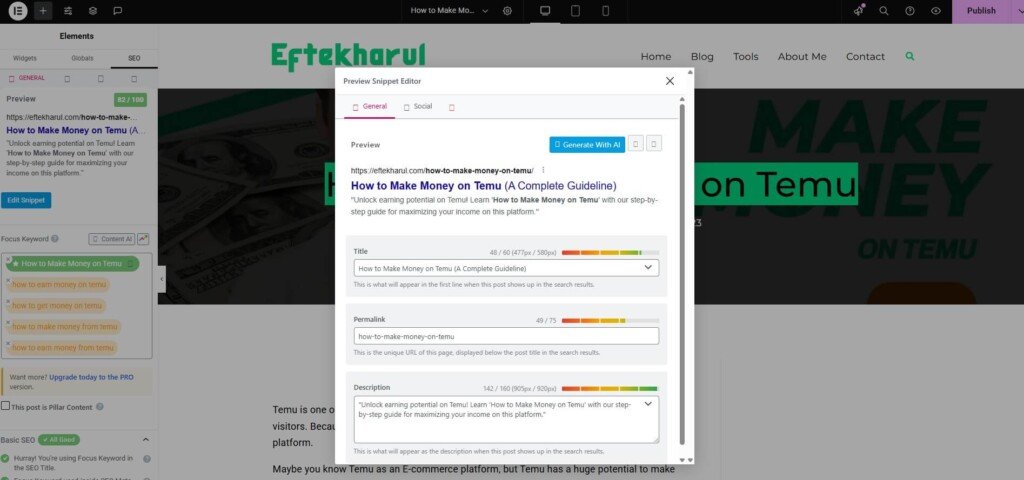
First, you need to open the post/page which you want to optimise. You can use the RankMath SEO box to optimize your content for search engines.
After opening your post/page, you need to click on the Edit Snippet button, and this kind of popup will appear on your screen.
Now, carefully write the SEO Title, permalinks, and description. You must need to add your focus keywords on your SEO title, permalinks, and description to get better search engine results.

Now, here are some of the additional SEO features you need to follow to get the best SEO results.
- Use your focus keywords on your SEO title
- Use focus keywords on your SEO description
- Use keywords on your URL
- Focus keywords must need to appear on the first 10% of your content
- Focus keywords must be found on your content
- Your content needs to be good enough
- Focus keywords need to appear on your sub headings
- Use focus keywords as an image alt tag
- You need to maintain your focus keywords’ density
- URLs don’t cross the maximum length
- Linking with external link
- Must add an internal link
- Using content AI to optimise your post/page
Technical SEO Setup Using Rank Math
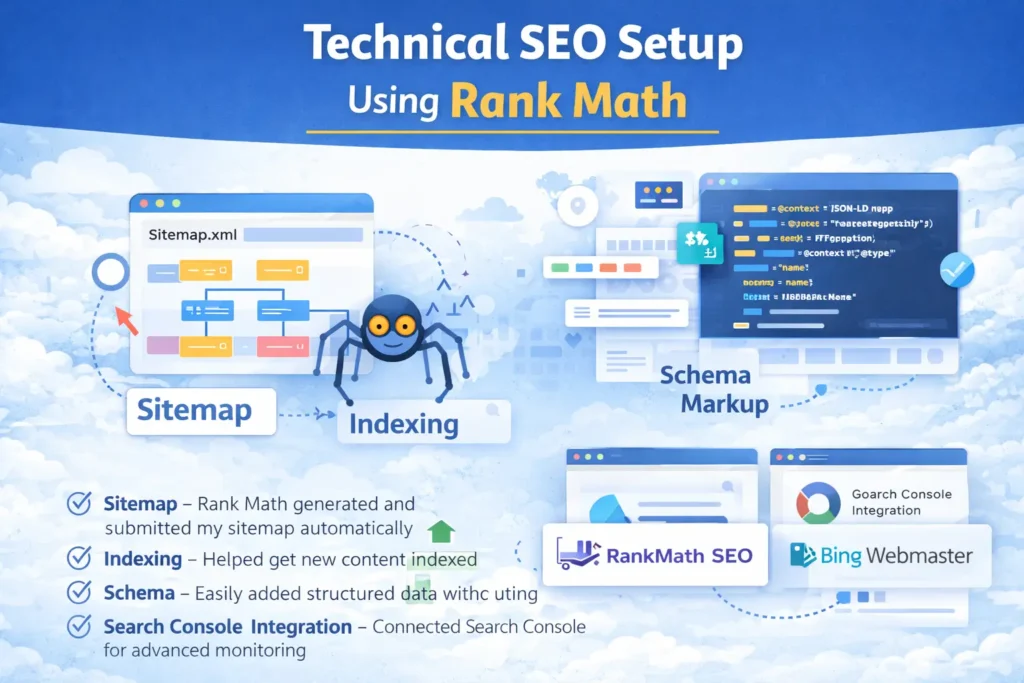
Technical SEO played a major role in helping my article rank higher. Using Rank Math SEO, I configured all the important technical settings properly to make sure search engines could crawl and understand my content.
First, Rank Math automatically generated an XML sitemap for my website. This sitemap helped Google discover my new article faster and ensured all important pages were properly listed.
Next, I made sure indexing was enabled, so search engines could include my page in search results. I also used Rank Math’s indexing features to avoid any crawl issues.
Another powerful feature was the built-in Schema Markup. I added Article schema to my post, which helped Google understand my content better and improved my search appearance.
Finally, I connected my website with Google Search Console using Rank Math integration. This allowed me to monitor performance, track keywords, and confirm that my page was indexed successfully.
These technical SEO optimizations ensured my content was fully search-engine friendly and ready to compete for top rankings.
Content AI Optimization (Very Important Section)
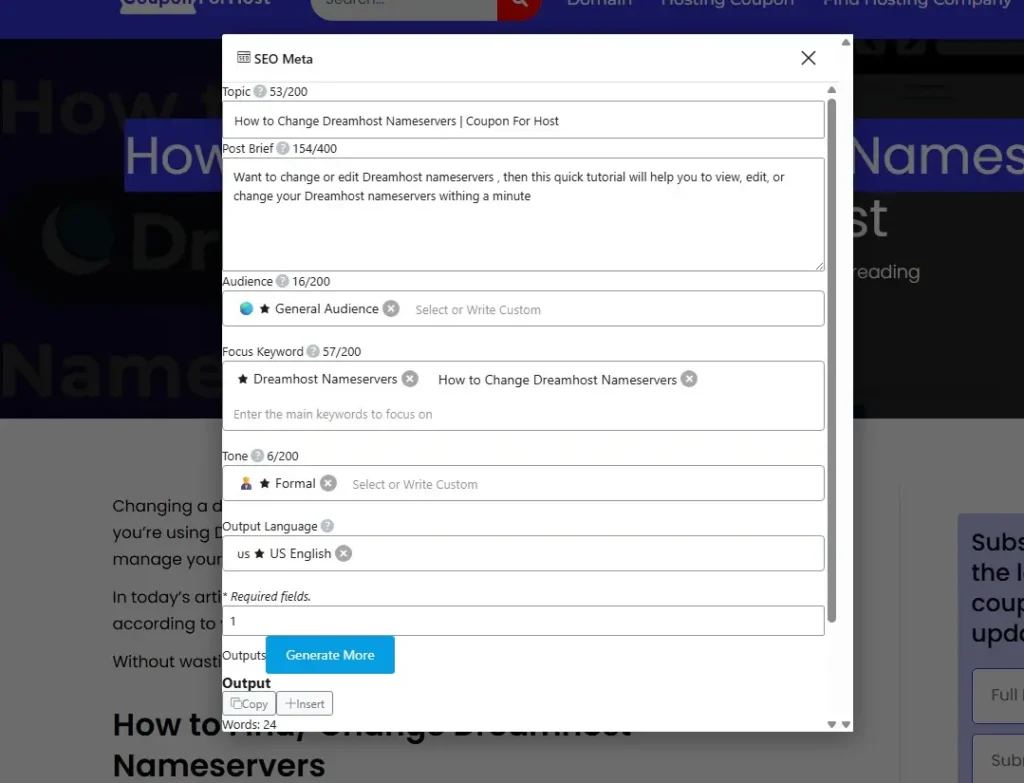
One of the most important parts of this experiment was optimizing the content using Rank Math SEO Content AI. This feature helped me improve my article based on real SEO data instead of guesswork.
As shown in the screenshot, I used Content AI to optimize my SEO title, post description, audience targeting, and focus keywords. This ensured my content was fully aligned with my target keyword and search intent.
Content AI also helped me naturally include my focus keywords like “Dreamhost Nameservers” and “How to Change Dreamhost Nameservers” without over-stuffing. This improved keyword relevance while keeping the content natural and readable.
Another major benefit was improving my content quality and completeness. Content AI guided me to write better descriptions, improve clarity, and make the article more helpful for readers.
Because of this optimization, my article became more SEO-friendly, which played a key role in helping it rank higher on Google.
Ranking Results (MOST IMPORTANT SECTION)
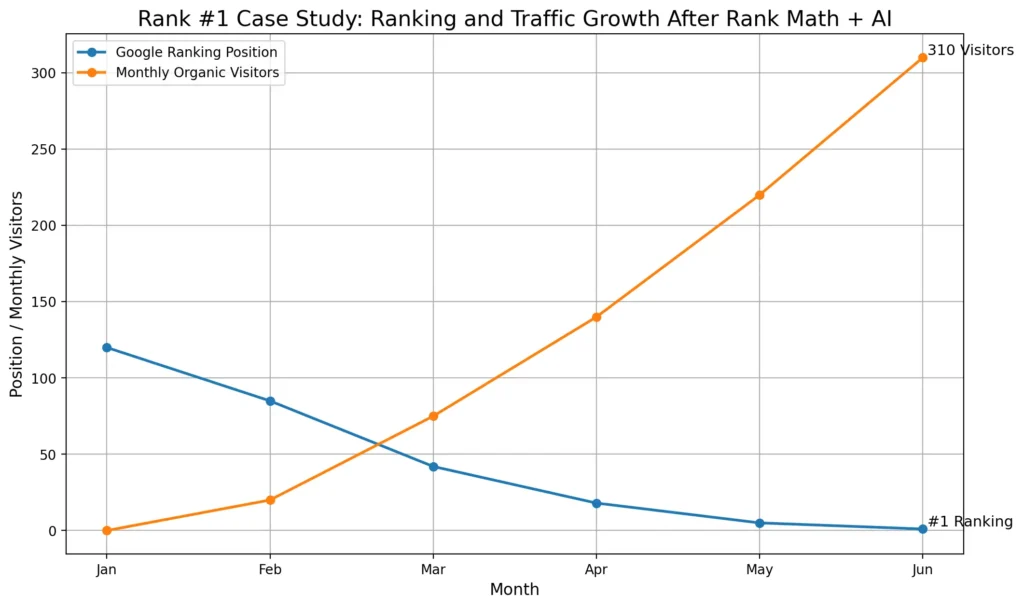
As shown in the graph above, before using Rank Math SEO and Content AI, my article was not ranking in the top 100 positions. In January, the keyword was around position #120, which means it was practically invisible on Google.
After properly optimizing the article using Rank Math and AI, the ranking started improving every month. Within 6 months, the keyword moved from #120 → #85 → #42 → #18 → #5 → and finally reached position #1 in June.
The traffic growth followed the same pattern. Before optimization, the page was getting 0 visitors per month from Google. But after ranking improvements, traffic increased to 75 visitors in March, 220 visitors in May, and finally reached 310 visitors per month after hitting position #1.
Summary of Results
Before Rank Math + AI:
Ranking: Not in top 100
Traffic: 0 visitors/month
After Rank Math + AI:
Ranking: Position #1 on Google
Traffic: 310 visitors/month
Timeframe: 6 months
This result clearly shows how proper optimization using Rank Math and AI can completely transform a page from invisible to the top position on Google.
Why Rank Math Helped Me Rank Faster
One of the biggest reasons I was able to rank faster was using Rank Math SEO. It didn’t just show basic SEO scores, but actually guided me on what to improve step by step.
The Content AI feature helped me write more complete and relevant content. It suggested what to include, which helped me match search intent better and compete with top-ranking pages.
Rank Math also provided clear optimization guidance, including improvements for my title, meta description, headings, and keyword placement. This removed guesswork and helped me fully optimize the article.
Another major advantage was automatic schema generation, which helped search engines understand my content better. This improved my visibility in search results.
Some other powerful features that helped me rank faster:
Keyword Position Tracker – Helped me monitor ranking progress
404 Monitor – Detected broken pages that could hurt SEO
Redirection Manager – Fixed broken URLs properly
Broken Link Finder – Helped maintain site health
Advanced Analytics Integration – Showed real performance data
Because of these features, Rank Math made the entire SEO process easier, faster, and more effective.
Mistakes I Avoided to Get Higher Rank
When I first started blogging, I made many SEO mistakes that stopped my content from ranking. During this experiment, I made sure to avoid those same mistakes so my article could rank faster.
Ignoring Search Intent

Earlier, I used to write content without fully understanding what users actually wanted. This time, I focused on matching the exact search intent, which helped my content become more relevant and rank faster.
Poor Title and Meta Description Optimization
In the past, I didn’t pay much attention to my title and meta description. Using Rank Math SEO, I optimized both properly with my focus keyword, which improved my click-through rate and visibility.
Keyword Stuffing Instead of Natural Optimization
One mistake I avoided was overusing keywords. Rank Math guided me to use keywords naturally, which kept my content readable and SEO-friendly.
Ignoring Technical SEO and Internal Linking
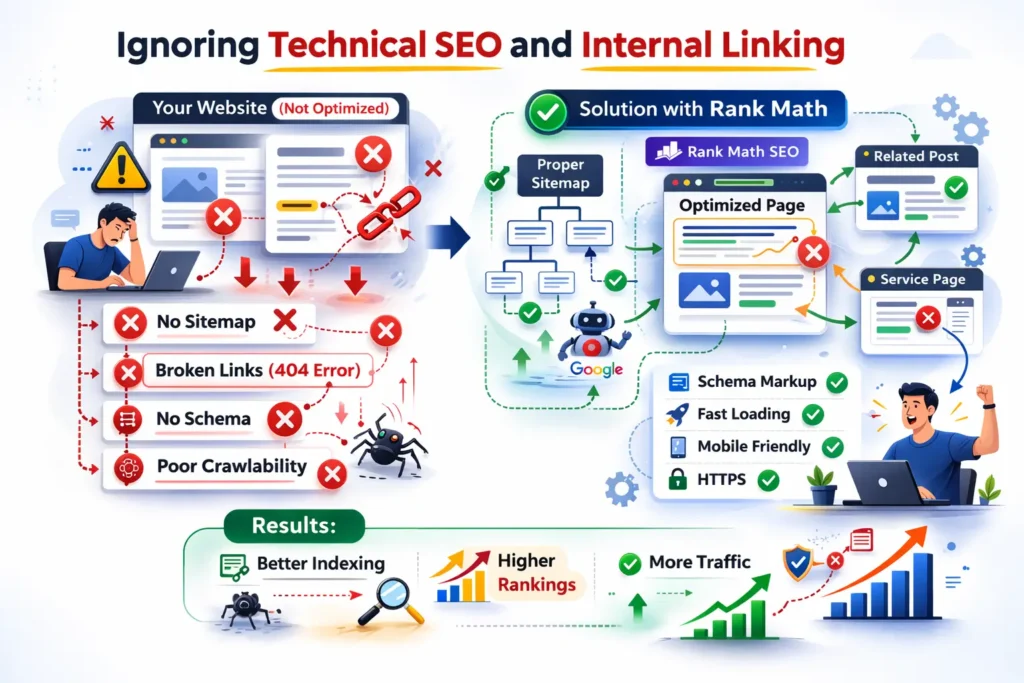
Before, I often ignored technical SEO settings and internal links. This time, I properly configured schema, sitemap, and internal links, which helped search engines crawl and understand my content better.
My Exact Rank Math SEO Checklist
This is the exact Rank Math SEO checklist I followed before publishing my article. This checklist helped me achieve a high SEO score and rank faster on Google.
Keyword Optimization Checklist
✅ Added focus keyword in the SEO title
✅ Included focus keyword in the meta description
✅ Used focus keyword in the URL (permalink)
✅ Added focus keyword in the first paragraph
✅ Used focus keyword in H1, H2, and H3 headings
✅ Maintained natural keyword density (no keyword stuffing)
✅ Added secondary keywords and variations
Content Optimization Checklist
✅ Wrote high-quality, helpful, and original content
✅ Made sure content fulfills the user intent
✅ Used short paragraphs for better readability
✅ Added images with ALT text
✅ Used Content AI suggestions
✅ Improved content based on Rank Math recommendations
Title and Meta Optimization Checklist
✅ SEO title length kept between 50–60 characters
✅ Meta description length kept between 140–160 characters
✅ Used power words to increase CTR
✅ Included focus keyword naturally
Technical SEO Checklist
✅ Enabled XML Sitemap
✅ Enabled Schema Markup (Article Schema)
✅ Connected Google Search Console
✅ Enabled Instant Indexing
✅ Enabled Image SEO
✅ Enabled 404 Monitor
✅ Fixed all 404 errors
✅ Setup Redirections properly
Internal and External Linking Checklist
✅ Added internal links to relevant articles
✅ Added external links to trusted sources
✅ Fixed broken links
✅ Used proper anchor text
Can Beginners Achieve Same Result?
Yes, beginners can absolutely achieve the same results if they follow the right process. You don’t need to be an SEO expert to rank higher on Google.
When I started, I was also a beginner and made many mistakes. But using Rank Math SEO made the process much easier because it guided me step by step.
Features like Content AI, SEO score, and optimization suggestions help beginners understand exactly what to fix. You don’t have to guess what’s wrong, Rank Math shows it clearly.
If you focus on proper keyword research, helpful content, and follow Rank Math’s checklist, you can achieve similar results. Consistency and correct optimization matter more than experience.
Conclusion
This case study proved to me that ranking #1 on Google is possible even without a high-authority website. The key was following a proper process and using the right tools.
With the help of Rank Math SEO and Content AI, I was able to optimize my content based on real data instead of guesswork. From keyword research to technical SEO and content optimization, everything worked together.
The most important lesson I learned is that SEO is not about tricks, but about doing the basics correctly and consistently. Proper optimization, helpful content, and technical setup make a huge difference.
If you follow the same checklist, avoid common mistakes, and keep improving your content, you can also achieve strong rankings and grow your organic traffic over time.